

10 Advantages of Diaphragm Pumps in Industrial Fluid Handling
Diaphragm pumps are among the most versatile and reliable pumping technologies available for modern industrial and commercial applications. Their unique design combines leak-free operation, chemical resistance, and mechanical simplicity, making them well-suited for a wide range of fluids and challenging process environments. Unlike traditional centrifugal or gear pumps, diaphragm pumps utilize a flexible diaphragm that isolates the pumped liquid from the drive mechanism, resulting in performance benefits that address common issues encountered in chemical dosing, wastewater treatment, and abrasive material transfer.
1. Self-Priming Capability
One of the most practical benefits of diaphragm pumps is their ability to self-prime. This means the pump can draw fluid into the suction line and establish flow without requiring the chamber to be filled manually before start-up. In contrast to centrifugal pumps, which must be primed to avoid air binding, diaphragm pumps use the suction created by diaphragm movement to evacuate air automatically. This feature simplifies installation and operation, particularly in systems with variable fluid levels or intermittent supply conditions.
2. Dry-Run Tolerance
Diaphragm pumps can tolerate running without fluid for a short period without suffering internal damage. This “dry-run” capability sets them apart from many other pump types, which rely on fluid for lubrication and cooling. In processes such as batch chemical transfer or intermittent dosing, where fluid supply can be unpredictable, this durability reduces the risk of costly equipment failure and unplanned downtime.
3. Leak-Free Operation
4. Broad Chemical Compatibility
Diaphragm pumps handle a wide variety of chemical fluids, including acids, bases, solvents, and viscous slurries, without degradation. The wetted components—such as diaphragms and valve seats—are available in chemically resistant materials like PTFE, PVDF, and EPDM. This flexibility allows one pump design to be adapted to many different process environments, reducing the need for multiple specialized pumping systems.
5. Solids and Slurry Handling
Unlike many positive displacement pumps, diaphragm pumps can manage liquids containing solid particles or slurries without clogging or internal damage. The flexible diaphragm action and strategically designed flow paths allow suspended solids to pass through the pump chamber smoothly. This makes diaphragm pumps ideal for wastewater treatment, sludge handling, paint transfer, and abrasive material transport where solids are present.
6. Adjustable Flow Control
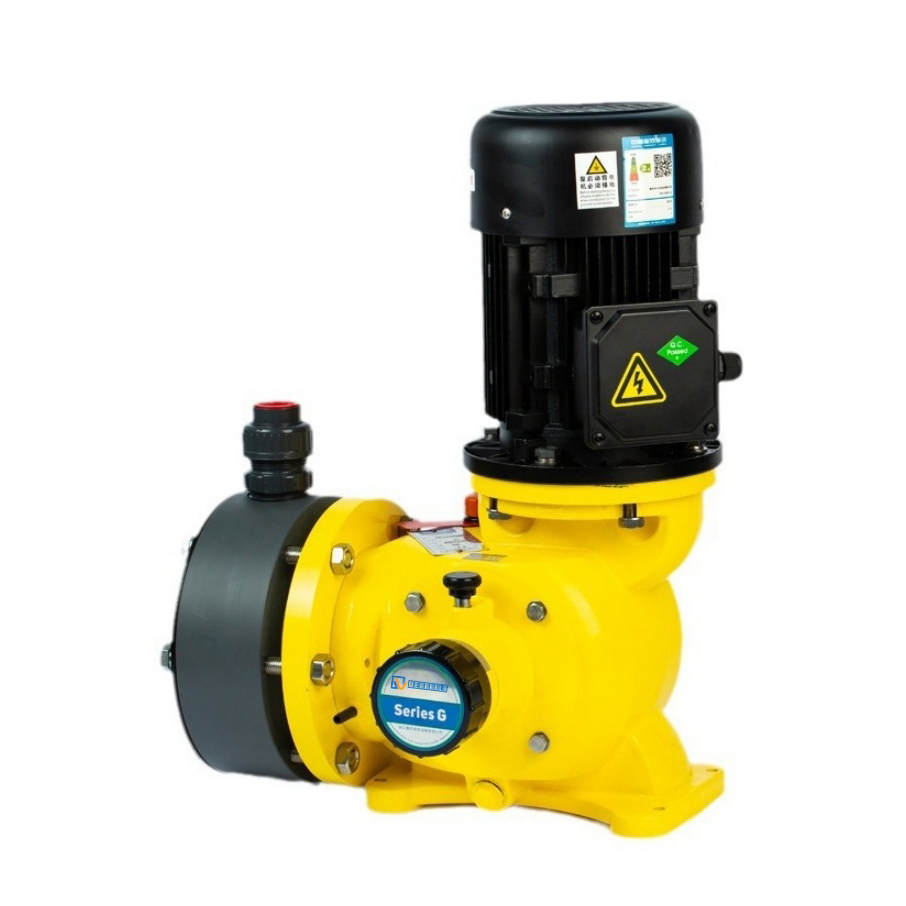
Diaphragm pump flow rates can be easily regulated. In air-operated models, flow is controlled by adjusting air pressure. In motor-driven variants, flow can be fine-tuned by altering stroke length or speed. This adaptability enables precise dosing and metering, making diaphragm pumps suitable for proportional chemical injection in process systems where accuracy is critical.
7. No Mechanical Seals
Traditional pumps often rely on mechanical seals or packing to prevent fluid leakage where the shaft enters the pump housing. These seals wear over time and require frequent maintenance. Diaphragm pumps eliminate this weak point altogether. By separating fluid contact from the drive mechanism, they reduce maintenance needs and improve operational reliability.
8. High Pressure Performance
Many diaphragm pumps are capable of producing medium to high discharge pressures—often up to 20 bar or more depending on design. This makes them suitable for applications that require injection into pressurized systems or where consistent pressure delivery is essential for stable process operation.
9. Self-Cleaning Action
Diaphragm pumps often feature non-return (check) valves that prevent backflow and help clear minor blockages during discharge. This self-cleaning action reduces the need for manual intervention and helps maintain consistent flow performance over extended operation periods.
10. Explosion-Proof Options
For environments where flammable gases or vapors may be present, air-operated double diaphragm (AODD) pumps provide an intrinsically safe option. Because these pumps operate using compressed air instead of electricity, there is no risk of sparks or overheating, making them suitable for hazardous locations such as chemical plants, oil refineries, and mining facilities.
In summary, diaphragm pumps offer a combination of self-priming capability, leak-free operation, chemical resistance, solids handling, and flexible flow control that is hard to match with other pump types. These advantages make them a preferred choice for a wide range of industrial applications, particularly where safety, reliability, and precision are required.
