

How Digital Dosing Pumps Enable Smarter and More Reliable Chemical Automation
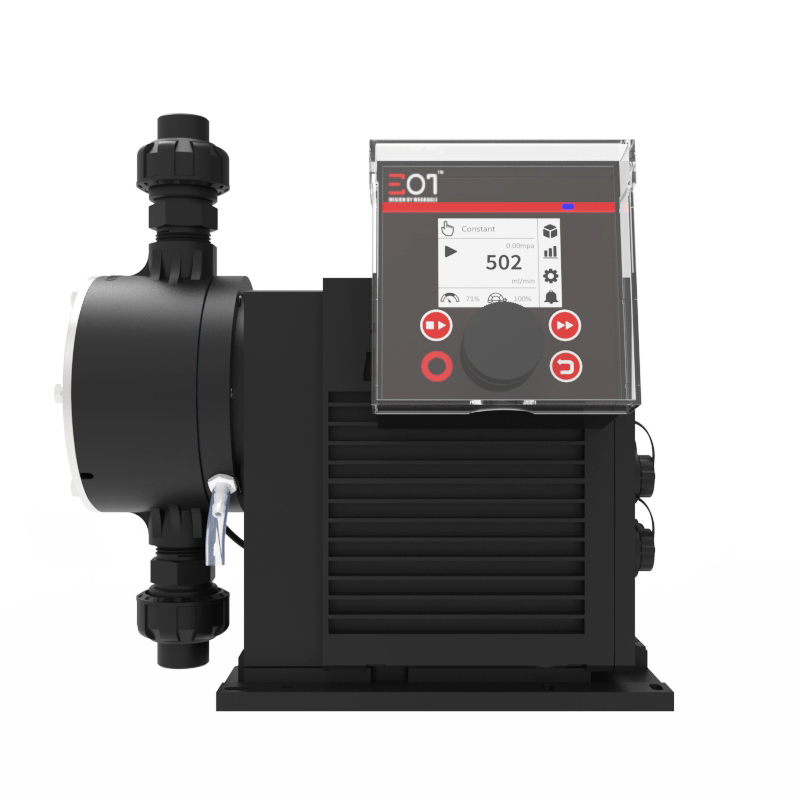
Automation has become a defining feature of modern process industries. From water treatment and energy production to pharmaceuticals and food processing, precise chemical control is essential for safety, efficiency, and product quality. At the center of this evolution is the Digital dosing pump , a new generation of metering equipment that combines mechanical accuracy with intelligent control.
Unlike conventional metering pumps that rely on fixed stroke mechanisms or manual adjustments, digital dosing pumps use electronic drive systems and control algorithms to regulate flow with extremely high precision. This allows chemical dosing to move from basic mechanical delivery into a fully automated and data-driven process.
What Is a Digital Dosing Pump?
A digital dosing pump is a type of metering pump designed to deliver very small and accurate volumes of liquid chemicals using electronic control rather than purely mechanical adjustment. Flow rate is controlled through digital signals, servo or stepper motors, and advanced algorithms instead of manual stroke length knobs.
This design enables the pump to respond instantly to changes in system demand. For example, if a sensor detects a shift in pH, turbidity, or flow rate, the digital dosing pump can automatically increase or decrease chemical injection to maintain stable conditions.
In practical terms, this means:
Higher dosing accuracy
Faster system response
Reduced chemical waste
Improved process stability
Why Digital Dosing Pumps Are Central to Automation
Automation in dosing systems depends on three core elements: sensing, control, and execution. Digital dosing pumps support all three.
1. Sensing
Modern dosing systems integrate sensors for pH, ORP, conductivity, flow, pressure, and level. These sensors continuously measure process conditions in real time.
2. Control
The control unit (either built into the pump or connected to a controller) interprets sensor signals and calculates the required chemical dosage.
3. Execution
The digital dosing pump executes that command with precise, repeatable motion—adjusting stroke frequency, motor speed, or pulse output instantly.
Because the pump is digitally driven, it can operate in multiple modes: proportional control, batch dosing, time-based dosing, or closed-loop feedback control. This flexibility makes it ideal for automated environments where conditions are constantly changing.
Key Advantages of Digital Dosing Pumps
1. High Accuracy and Repeatability
Digital dosing pumps can achieve accuracy levels well below 1%. This is critical in applications such as water treatment, where overdosing wastes chemicals and underdosing compromises safety.
2. Intelligent Control
Built-in logic allows pumps to operate without constant human adjustment. They can maintain stable dosing even when system flow or concentration changes.
3. Remote Monitoring and Communication
Most digital dosing pumps support communication protocols such as Modbus, 4–20 mA, or digital pulse signals. This allows integration with PLCs, SCADA systems, and remote monitoring platforms.
4. Reduced Chemical Consumption
Because dosing is based on real process data, chemical usage is optimized. This lowers operating costs and reduces environmental impact.
5. Easier Maintenance and Diagnostics
Digital systems can provide alarms, status reports, and wear-part alerts. Instead of waiting for failure, maintenance becomes predictive rather than reactive.
Typical Applications of Digital Dosing Pumps
Digital dosing pumps are used wherever chemicals must be added with precision and consistency. Common applications include:
Water and wastewater treatment – Dosing chlorine, sodium hypochlorite, coagulants, and pH control agents
Industrial cooling systems – Injecting scale inhibitors and biocides
Chemical processing – Feeding acids, bases, and additives
Food and beverage – Dosing flavoring, preservatives, and cleaning chemicals
Energy and power plants – Treating boiler water and condensate
Pharmaceutical and biotech – Accurate delivery of reagents and buffers
In all of these environments, stable and automated dosing is critical to product quality, safety, and compliance.
Digital Dosing Pump vs. Traditional Metering Pumps
Traditional metering pumps rely on fixed mechanical strokes and manual adjustments. While reliable, they lack the flexibility and responsiveness required in automated systems.
A Digital dosing pump differs in several important ways:
| Feature | Traditional Metering Pump | Digital Dosing Pump |
| Flow control method | Manual / mechanical | Electronic / digital |
| Response to system changes | Slow | Instant, automatic |
| Integration with sensors | Limited | Full automation |
| Accuracy | Moderate | Very high |
| Remote monitoring | Rare | Standard feature |
This makes digital dosing pumps better suited for modern facilities that demand efficiency, traceability, and remote operation.
Selecting the Right Digital Dosing Pump
When choosing a digital dosing pump for an automated system, several factors must be evaluated:
Chemical compatibility – Wetted materials must resist corrosion and swelling
Flow range and pressure – The pump must match system demands
Control interface – Ensure compatibility with PLC or sensor outputs
Accuracy requirements – Critical for regulatory or quality-sensitive processes
Maintenance access – Easy diaphragm or valve replacement reduces downtime
Proper sizing and configuration ensure the pump performs reliably under real operating conditions.
The Role of Digital Dosing Pumps in Smart Fluid Management
Automation is not just about replacing manual labor—it is about improving decision-making and system performance. A Digital dosing pump transforms chemical injection from a fixed operation into an adaptive, intelligent process.
With integrated sensors, digital control, and communication capabilities, these pumps act as active components in a smart fluid management system. They reduce waste, increase safety, and make complex dosing tasks simple and repeatable.
As industries continue moving toward digitalization and remote operation, the digital dosing pump is no longer just a metering device—it is a core element of modern, automated process control.
