

How to Choose a Chemical Pump for High-Temperature Fluids
Selecting a chemical pump for high-temperature fluids requires more than checking its maximum operating temperature. Heat can change a chemical's viscosity, vapor pressure, corrosiveness, and interaction with pump materials. A pump that performs reliably at room temperature may encounter sealing problems, cavitation, or premature component wear when exposed to elevated temperatures.
The challenge is finding a pump that can maintain stable fluid transfer while handling both thermal and chemical stress.
Whether the application involves heated acids, alkaline solutions, hot process chemicals, or industrial wastewater, the selection process should consider the complete operating conditions rather than temperature alone.
Why Does Temperature Matter in Chemical Pump Selection?
Temperature affects both the fluid being transferred and the equipment handling it.
As operating temperature increases, several changes may occur:
- Chemical compatibility: A material suitable at ambient temperature may become less resistant to a particular chemical at elevated temperatures.
- Viscosity: Many liquids become less viscous when heated, potentially changing flow behavior and pump performance.
- Vapor pressure: Higher temperatures generally increase liquid vapor pressure, potentially raising the risk of cavitation.
- Thermal expansion: Pump components, piping, and sealing elements may expand at different rates, affecting mechanical clearances and sealing performance.
These effects can interact. For example, a heated chemical may flow more easily because its viscosity decreases, yet become more difficult to pump safely because its vapor pressure increases.
A suitable high-temperature chemical pump must therefore be evaluated against the actual fluid properties at its intended operating temperature.
1. Evaluate Chemical Compatibility at the Actual Temperature
Material compatibility should be the starting point when selecting a pump for hot chemical fluids.
It is not enough to identify a pump as corrosion-resistant. Its wetted materials must be compatible with the specific chemical, concentration, and temperature.
For example, stainless steel offers mechanical strength and is widely used in industrial equipment, but its corrosion resistance depends on the chemical environment and alloy grade. Similarly, fluoropolymers such as PTFE and PVDF offer useful chemical resistance, but their temperature limits and mechanical properties differ.
Comparing Common Chemical Pump Materials
| Material | General Characteristics | High-Temperature Selection Considerations |
|---|---|---|
| PTFE | Broad chemical resistance | Check mechanical loading, creep, and the complete component design |
| PVDF | Good resistance to many corrosive chemicals | Verify the manufacturer's temperature and chemical compatibility limits |
| PP | Economical and resistant to various chemicals | Elevated temperatures can limit its suitability |
| Stainless steel | Good mechanical strength | Select the appropriate grade for the chemical, concentration, and temperature |
| Specialty alloys | Designed for demanding chemical environments | Selection depends on the specific corrosion mechanism and operating conditions |
These are general material characteristics, not universal compatibility ratings. A material's suitability must be confirmed using chemical-resistance data and the pump manufacturer's specifications.
Pay particular attention to the weakest wetted component. A pump casing may tolerate the operating temperature while its diaphragm, valve seat, gasket, or seal does not.
2. Check Sealing Performance and Thermal Resistance
Sealing is another critical consideration when transferring high-temperature chemicals. Even if the pump casing is compatible with the liquid, unsuitable seals may deteriorate under prolonged thermal exposure.
Mechanical seals, O-rings, gaskets, and diaphragms must withstand the combined effects of temperature, chemical exposure, and operating pressure.
For example, an elastomer may offer good resistance to a particular chemical at room temperature but have a more limited operating range when exposed to heat.
The appropriate sealing arrangement also depends on the hazard associated with the fluid. For volatile, toxic, or particularly aggressive chemicals, a double mechanical seal with a suitable support system or an appropriate sealless design may be worth considering.
KSB identifies mechanical seals, magnetic-drive pumps, and canned-motor pumps among the containment options used in chemical pumping applications. KSB
The objective is not simply to select the most expensive sealing technology. It is to choose a configuration that provides suitable containment throughout normal operation, startup, shutdown, and expected temperature fluctuations.
3. Consider Vapor Pressure and Cavitation Risk
One easily overlooked problem in high-temperature chemical transfer is cavitation.
As a liquid becomes hotter, its vapor pressure generally increases. If the local pressure inside the pump falls below the liquid's vapor pressure, vapor bubbles can form. When these bubbles subsequently collapse in higher-pressure regions, they can damage internal components.
For centrifugal chemical pumps, this makes Net Positive Suction Head (NPSH) particularly important.
The available NPSH (NPSHa) must exceed the pump's required NPSH (NPSHr) with an appropriate margin under the specified operating conditions. KSB+1
Several installation practices can help reduce suction-related problems:
- ▶ Minimize unnecessary restrictions and pressure losses in the suction pipeline.
- ▶ Provide adequate liquid level or inlet pressure where possible.
- ▶ Calculate suction conditions using the fluid's actual operating temperature and vapor pressure.
- ▶ Avoid operating outside the pump's recommended performance range.
These measures are especially relevant when transferring heated chemicals from storage tanks or process vessels.
4. Match the Pump Type to the Fluid and Process
Not every high-temperature application requires the same pump technology.
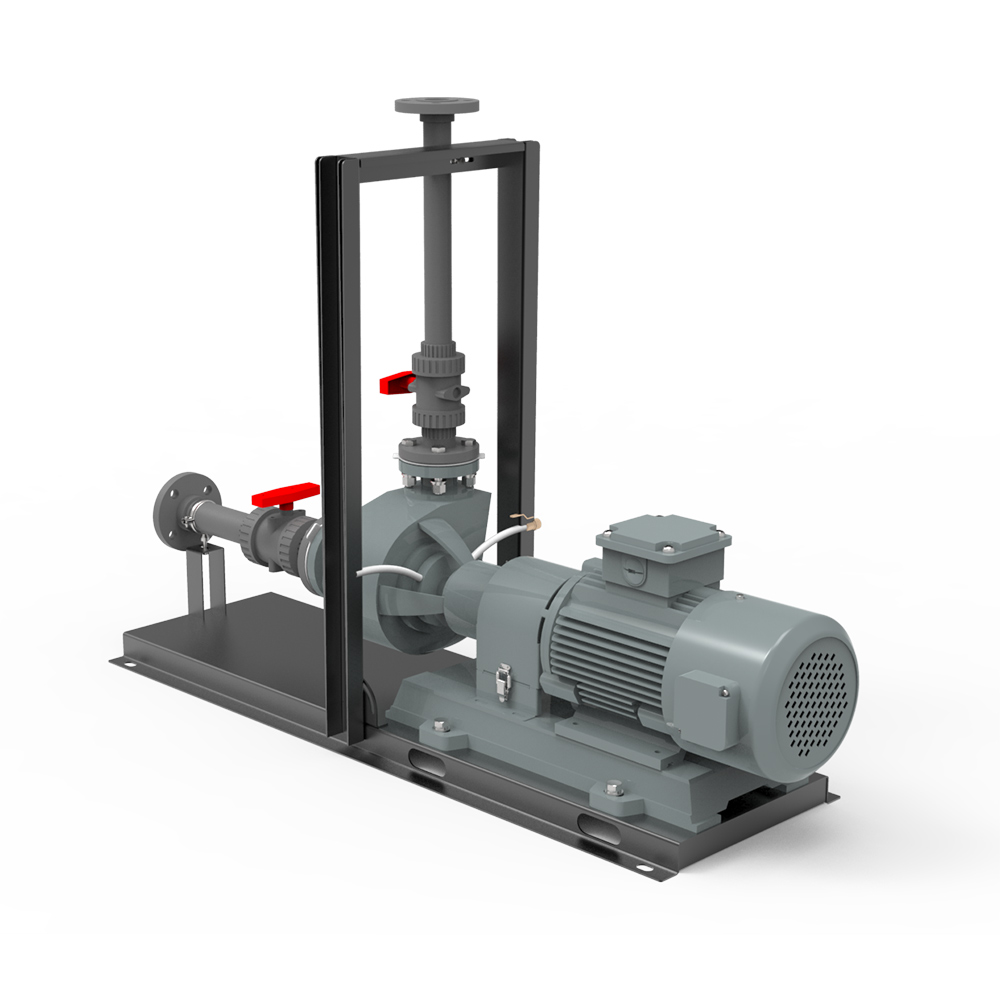
A centrifugal pump may be appropriate for continuous transfer of relatively low-viscosity liquids, provided that its materials, sealing arrangement, hydraulic performance, and temperature rating meet the process requirements.
A positive-displacement pump may be preferable when the application involves precise chemical injection or fluid properties that make conventional centrifugal pumping less suitable.
The following table provides a general comparison.
Pump Type Comparison
| Pump Type | Potential Application | Key Selection Consideration |
|---|---|---|
| Centrifugal chemical pump | Continuous chemical transfer | NPSH, flow, head, sealing |
| Mechanical diaphragm pump | Controlled chemical dosing | Diaphragm and valve temperature limits |
| Digital dosing pump | Precise chemical injection | Dosing accuracy and wetted-component compatibility |
| Screw pump | Viscous process fluids | Thermal clearances, viscosity, and sealing |
| Magnetic-drive pump | Applications requiring shaft-seal-free containment | Temperature limits of internal components and adequate cooling |
The actual temperature rating varies considerably between models, even within the same pump category.
For instance, a digital dosing pump designed for ambient-temperature water treatment should not automatically be assumed suitable for transferring hot industrial chemicals.
Always verify the complete pump assembly's operating limits before making a selection.
5. Account for Thermal Expansion and Operating Cycles
A pump may operate reliably at a stable elevated temperature but experience problems during repeated heating and cooling cycles.
Different components expand at different rates. This can affect internal clearances, shaft alignment, sealing surfaces, and connections between the pump and piping.
Rapid temperature changes can also introduce thermal stress.
For processes involving frequent startup and shutdown, consider whether the pump requires controlled warm-up procedures, appropriate piping expansion allowances, or special thermal management.
High-temperature pump designs may incorporate heated casings, cooled seal areas, or other temperature-control features depending on the application. KSB+1
These requirements should be discussed during equipment selection rather than addressed only after installation.
6. How to Evaluate a High-Temperature Chemical Pump Before Purchase
Once the basic pump type has been identified, the next step is to verify whether the proposed model can operate safely across the complete process range.
A useful starting point is to prepare an operating-condition specification.
Operating-Condition Specification
| Parameter | Information to Confirm | Why It Matters |
|---|---|---|
| Chemical composition | Exact chemical or mixture | Determines material compatibility |
| Concentration | Normal and maximum concentration | Influences chemical resistance |
| Temperature | Normal, maximum, and startup temperature | Defines thermal requirements |
| Flow rate | Minimum, normal, and maximum demand | Supports correct pump sizing |
| Pressure | Suction and discharge conditions | Determines hydraulic and mechanical requirements |
| Fluid properties | Viscosity, density, vapor pressure | Influences performance and suction conditions |
| Operating schedule | Continuous or intermittent | Helps evaluate thermal cycling and service life |
This information gives manufacturers a clearer basis for recommending suitable materials, seals, and pump configurations.
It also reduces the likelihood of selecting a pump that meets the required flow rate but fails to accommodate the actual chemical environment.
Grundfos similarly emphasizes that concentration, liquid temperature, and pressure can affect the chemical resistance of a particular pump configuration. Its published compatibility guidance is intended as a starting point rather than a substitute for evaluating actual working conditions. api.grundfos.com+1
Common Questions About High-Temperature Chemical Pumps
Can a standard chemical pump handle high-temperature liquids?
Only if its complete assembly is rated for the intended operating conditions. The maximum allowable temperature of the pump casing alone is not sufficient to establish suitability.
Seals, diaphragms, bearings, internal components, and other temperature-sensitive parts must also be considered.
Is stainless steel always the best material for hot chemicals?
No. Although stainless steel offers useful mechanical strength and temperature resistance, its chemical compatibility depends on the specific alloy, chemical composition, concentration, and operating conditions.
Certain corrosive environments may require alternative materials or specialized alloys.
Does a higher operating temperature always reduce pump efficiency?
Not necessarily.
Heating can reduce the viscosity of many liquids, which may improve their flow characteristics. However, increased vapor pressure, thermal expansion, and changes in operating conditions can introduce other performance challenges.
The overall effect depends on the fluid and pump design.
Should I choose a pump with a temperature rating higher than my normal operating temperature?
The selected pump should accommodate the maximum credible operating temperature, including relevant process variations.
However, temperature rating alone does not establish suitability. Chemical compatibility, pressure rating, sealing design, and other operating requirements must also be verified.
Reliable High-Temperature Pumping Starts With Proper Selection
Choosing a chemical pump for high-temperature fluids requires a balance between chemical resistance, thermal performance, hydraulic efficiency, and operational safety.
Rather than focusing exclusively on the maximum temperature listed in a product specification, evaluate how the fluid behaves under actual process conditions and how those conditions affect every critical pump component.
A properly selected corrosion-resistant chemical pump can help maintain consistent fluid transfer, reduce premature component failure, and support safer industrial operations.
For applications involving heated chemicals, sharing complete process information with the pump manufacturer is the most practical way to identify a suitable configuration and avoid unnecessary maintenance problems.
