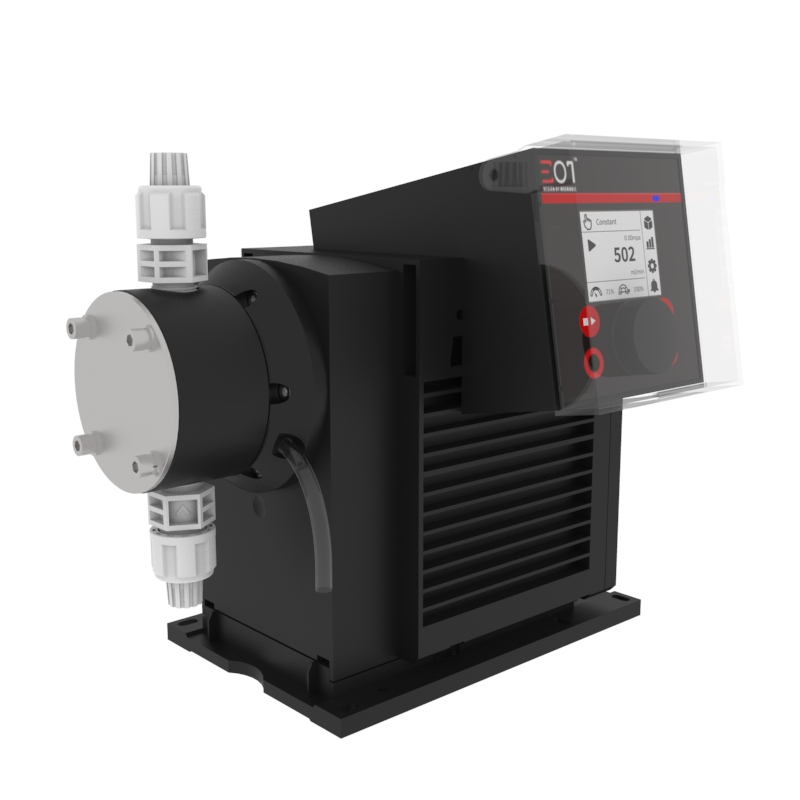

Troubleshooting Digital Dosing Pump Systems: A Practical Guide
Digital dosing pump systems have become a cornerstone of modern chemical dosing processes, offering high precision, automation, and integration capabilities. However, even the most advanced systems are not immune to operational issues. When problems arise, many users instinctively suspect equipment failure. In reality, most dosing system issues originate from configuration errors, installation flaws, or process mismatches rather than the pump itself .
Developing a structured and analytical troubleshooting approach is essential—not only to resolve issues efficiently but also to improve long-term system reliability.
Understanding the Nature of Dosing System Problems
Before attempting to fix any issue, it is important to recognize that a digital dosing pump does not operate in isolation. It is part of a broader system that includes pipelines, valves, sensors, control signals, and chemical media. Any imbalance within this system can directly affect dosing performance .
For example, a perfectly functioning pump can still deliver inaccurate dosing if the suction conditions are unstable or if the chemical properties have changed. Similarly, a well-installed system may still trigger alarms if signal inputs are inconsistent. This interconnected nature means that troubleshooting must always consider the entire system, not just the pump.
A useful mindset is to treat dosing issues as system-level deviations rather than isolated faults.
Issue 1: A Structured Troubleshooting Framework
Effective troubleshooting is not about reacting randomly to symptoms, but about following a logical sequence:
1. Observe the symptom clearly
Identify whether the issue is related to flow, accuracy, pressure, or system alarms.
2. Classify the root category
Most problems fall into three categories: mechanical issues, control/system issues, or chemical/process-related issues.
3. Eliminate variables step by step
Start with the simplest checks—such as air leaks or parameter settings—before moving to complex diagnostics.
This structured approach helps avoid unnecessary downtime and prevents misdiagnosis, which is a common problem in field operations.
Issue 2: Inaccurate Dosing: Beyond Simple Calibration Issues
Inaccurate dosing—whether overdosing or underdosing—is one of the most critical issues because it directly impacts process outcomes and compliance.
While calibration errors are often blamed, the underlying causes are usually more complex. For instance, air ingress in the suction line can create intermittent flow gaps , leading to inconsistent dosing. Back pressure fluctuations can alter the pump’s effective output, even if the setpoint remains unchanged. Additionally, variations in chemical viscosity—caused by temperature changes or formulation differences—can significantly affect flow accuracy.
Another overlooked factor is system response time. In dynamic processes, delays between measurement and dosing adjustment can create oscillations, where the system continuously overcorrects itself.
To address inaccurate dosing effectively, operators must go beyond recalibration. They should ensure stable suction conditions, maintain consistent back pressure, and evaluate whether the control logic matches the process dynamics. In many cases, adding auxiliary components such as back pressure valves or pulsation dampeners can dramatically improve stability.
Issue 3: Flow Instability and Priming Challenges
When a dosing pump fails to deliver consistent flow—or fails to deliver at all—the issue often originates from the fluid handling side rather than the control system.
One of the most common causes is excessive suction lift. Digital dosing pumps are designed for specific suction conditions, and exceeding these limits can lead to cavitation or loss of prime. Similarly, clogged filters or partially blocked pipelines can restrict flow, creating erratic output.
Air accumulation is another critical factor. Even small air bubbles can disrupt the continuity of liquid flow, especially in precision dosing applications.
To resolve these issues, it is essential to optimize the physical installation. Reducing suction height, ensuring airtight connections, and performing proper priming procedures are fundamental steps . Regular cleaning of filters and inspection of check valves can further enhance system reliability.
Issue 4: Alarms, Signal Errors, and Control Instability
Digital dosing systems rely heavily on electronic control and external signals. While this enables automation, it also introduces new potential failure points.
For example, unstable 4–20 mA signals or incorrect pulse inputs can cause the pump to misinterpret process conditions. Faulty sensors may send inaccurate data, triggering alarms or unnecessary shutdowns. In some cases, improper parameter settings—such as incorrect scaling or response curves—can lead to continuous system instability.
Unlike mechanical issues, these problems are not always visible, making them harder to diagnose. Operators must carefully verify signal integrity, check wiring connections, and confirm that all control parameters are correctly configured.
The more advanced the system, the more critical proper configuration becomes. A highly intelligent pump can only perform as well as the data and settings it receives.
Issue 5: Leakage, Material Compatibility, and Long-Term Degradation
Leakage and corrosion are often gradual issues that develop over time but can lead to serious consequences if ignored.
Chemical compatibility is a key factor. Certain aggressive chemicals can degrade standard materials, causing seals to fail or components to crack. Temperature variations and pressure fluctuations can accelerate this process.
Improper installation, such as overtightened fittings or misaligned connections, can also contribute to mechanical stress and eventual leakage.
To mitigate these risks, users should select materials that match the chemical properties—such as PVDF or PTFE for corrosive media—and implement routine inspection schedules. Replacing seals before failure occurs is a simple yet highly effective preventive measure.
Common Problems, Causes, and Solutions Overview
| Problem Type | Typical Causes | Recommended Solutions |
| Inaccurate dosing | Calibration drift, air in suction, pressure changes | Recalibrate, remove air, install back pressure devices |
| No flow or unstable flow | High suction lift, clogged filters, air bubbles | Reduce suction height, clean filters, ensure proper priming |
| Frequent alarms/shutdowns | Signal instability, sensor faults, wrong settings | Check signals, verify sensors, adjust parameters |
| Leakage or corrosion | Material incompatibility, worn seals, poor install | Use compatible materials, replace seals, improve setup |
From Reactive Fixes to Proactive Control
Troubleshooting should not be viewed as a one-time corrective action, but as part of a broader strategy to improve system performance. The ultimate goal is to reduce the frequency of issues rather than simply responding to them.
This shift requires attention to several key practices:
Routine calibration to maintain accuracy over time
Proper system design to ensure stable operating conditions
Careful equipment selection based on process requirements
Integration with monitoring systems for real-time feedback
By adopting a proactive approach, users can transform dosing systems from potential sources of disruption into reliable, predictable components of their processes.
Building a More Reliable Dosing System
As industries move toward automation and data-driven operations, digital dosing pumps play an increasingly important role. However, their performance depends not only on technology, but also on how well they are implemented and managed.
A reliable dosing system is not achieved by eliminating all problems, but by understanding, controlling, and minimizing them through proper design and operation.
When users shift their focus from simply fixing issues to optimizing the entire system, they unlock the full potential of digital dosing technology—achieving not only precision, but also long-term stability and efficiency.
Related products
E01A 060-04 Digital Dosing Pump
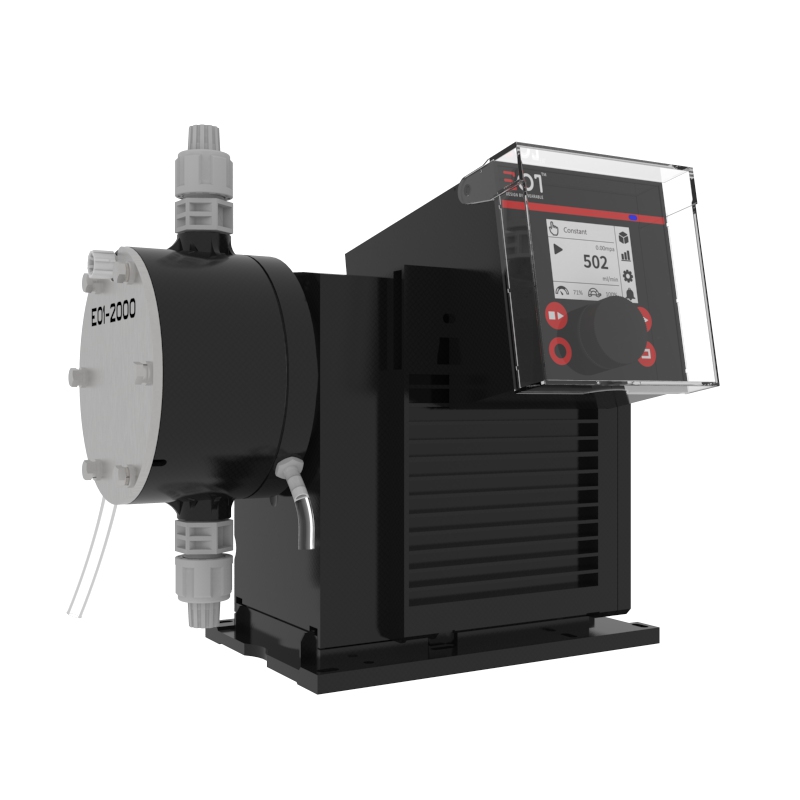
E01A 042-07 Accurate Digital Dosing Pump